
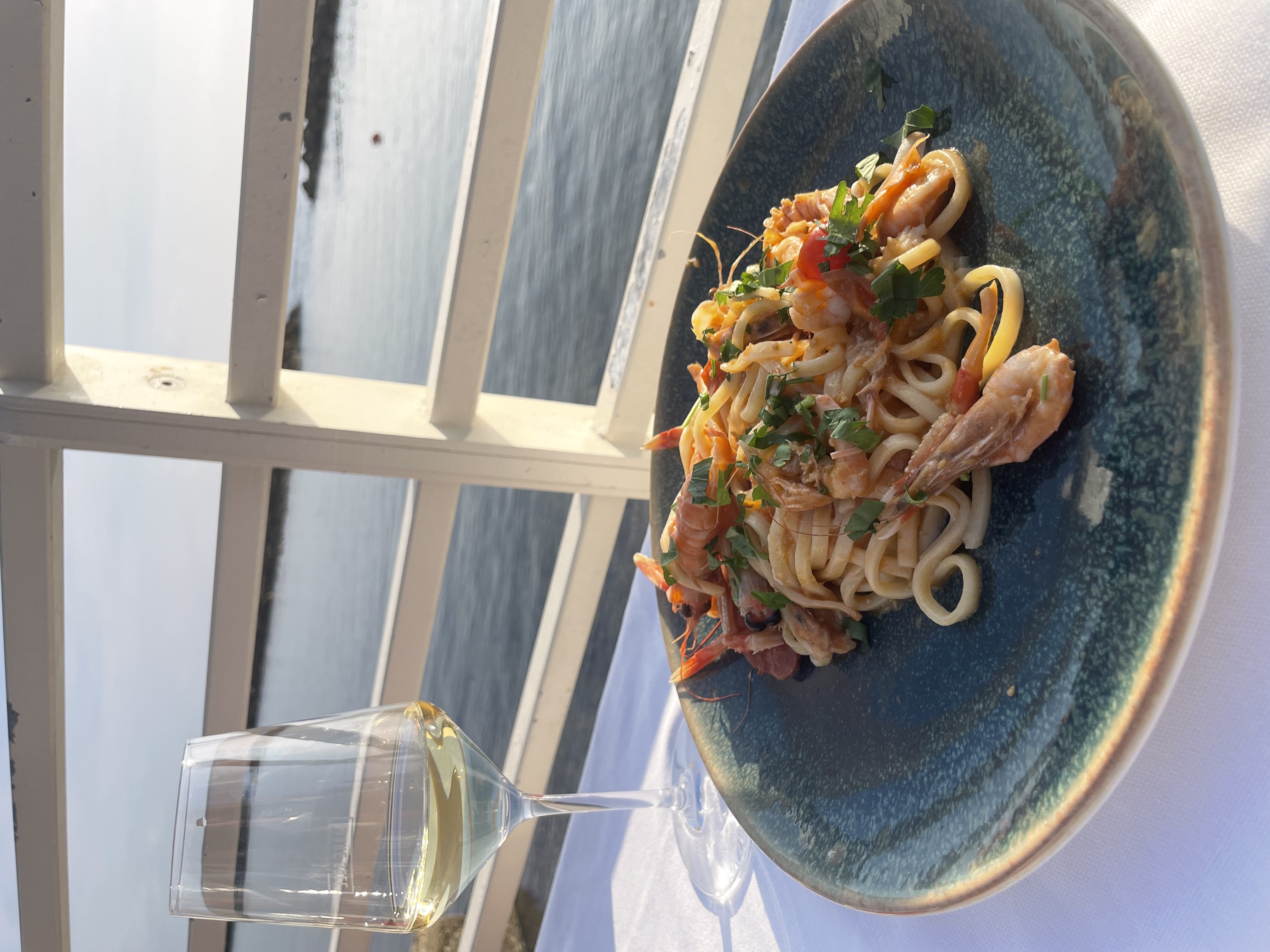
1. Zuppa di Pesce alla Civitavecchiese
This is the local dish.
Unlike other Italian fish soups, the Civitavecchia version is bold, rustic, and deeply flavorful. It typically includes:
-
Different varieties of local fish
-
Mussels and clams
-
Squid or cuttlefish
-
A rich tomato base
-
Garlic and chili
It’s traditionally served over toasted bread that soaks up the broth. Every family has its own version — and locals will absolutely debate whose is best.
2. Moscardini in Umido
Small octopus (moscardini) slowly simmered in tomato sauce with white wine and parsley. Tender, rich, and intensely Mediterranean.
This is the kind of dish locals order without thinking twice — simple ingredients, perfected through repetition.
3. Frittura di Pesce (Mixed Fried Seafood)
Being a historic port on the Tyrrhenian Sea, Civitavecchia shines when it comes to seafood. A cone or platter of frittura di pesce—typically calamari, shrimp, and small local fish—lightly floured and fried—is a must.
It’s best enjoyed:
-
Freshly made
-
With just a squeeze of lemon
-
Paired with a cold local white wine
Simple, crispy, and full of sea flavor.
4. Spaghetti alle Vongole
A coastal Italian classic done exceptionally well here. Spaghetti alle vongole (with clams) is usually prepared “in bianco” (without tomato), with garlic, parsley, olive oil, and a splash of white wine.
In Civitavecchia, the clams are incredibly fresh—often sourced locally—making this dish light, briny, and elegant.
5. Lumache (Snails) — The Old-Style Way
This may surprise visitors, but snails are part of the area’s traditional cuisine, especially during certain religious festivities (St John on 24th June).
They’re usually cooked in a tomato-based sauce with mint and chili. It’s an ancient rural tradition that made its way into coastal cooking. Not always on tourist menus — but if you see them, you’ve found something authentic.
6. Local Artichokes (When in Season)
The countryside around northern Lazio produces excellent artichokes. In season, look for:
-
Carciofi alla romana
-
Fried artichokes
-
Artichokes in pasta
It’s a reminder that Civitavecchia isn’t only sea — it’s also closely tied to inland agriculture.
7. Pizza alla Romana
You’re in Lazio, after all. Thin, crispy Roman-style pizza is common here, often topped with:
-
Margherita (tomato, mozzarella, basil)
-
Capricciosa (artichokes, ham, mushrooms, olives)
-
Marinara (tomato, garlic, oregano)
Perfect for a casual lunch near the harbor.
8. Pizza alla Civitavecchiese
Born from the meeting of local flavours and seafaring traditions, Pizza Civitavecchiese is a delicious stuffed pizza filled with fresh tomatoes, garlic and anchovies. Its roots trace back to mariners from Gaeta and southern Italy, who brought their traditional tiella to Civitavecchia. Over time, it became a local favourite, carrying the flavours and stories of the sea in every bite. Every year there is a competition deciding the best pizza civitavecchiese in town.
9. Local Pastries and Espresso
End your meal the Italian way:
-
Maritozzo
-
Tiramisu
-
Crostata with ricotta and sour cherries
Pair it with a strong espresso at a local bar and enjoy a slow moment of Italian daily life.
10. Sambuca or Amaro After Dinner
While limoncello is popular with visitors, locals often finish a meal with:
-
Sambuca
-
Amaro (herbal liqueur)
Something strong, slightly bitter, and very Italian.
Sambuca Molinari: a Civitavecchia legend!
Born in Civitavecchia in 1945, Sambuca Molinari is one of Italy’s most iconic anise-flavoured liqueurs. Created by Angelo Molinari, it became famous for its unmistakable aroma, smooth taste and the timeless ritual of serving it with three coffee beans (con la mosca). Actually the original Sambuca was invented by Manzi but Molinari is the one which became famous all over the world. A true local success story that brought the spirit of Civitavecchia to the world!
Civitavecchia’s cuisine is not flashy. It’s honest, maritime, and deeply traditional. It tells the story of fishermen, trade routes, and family kitchens — not trends.
If you want to taste the real town, order the fish soup, ask what’s fresh, and let the kitchen decide.
That’s where the magic is.