
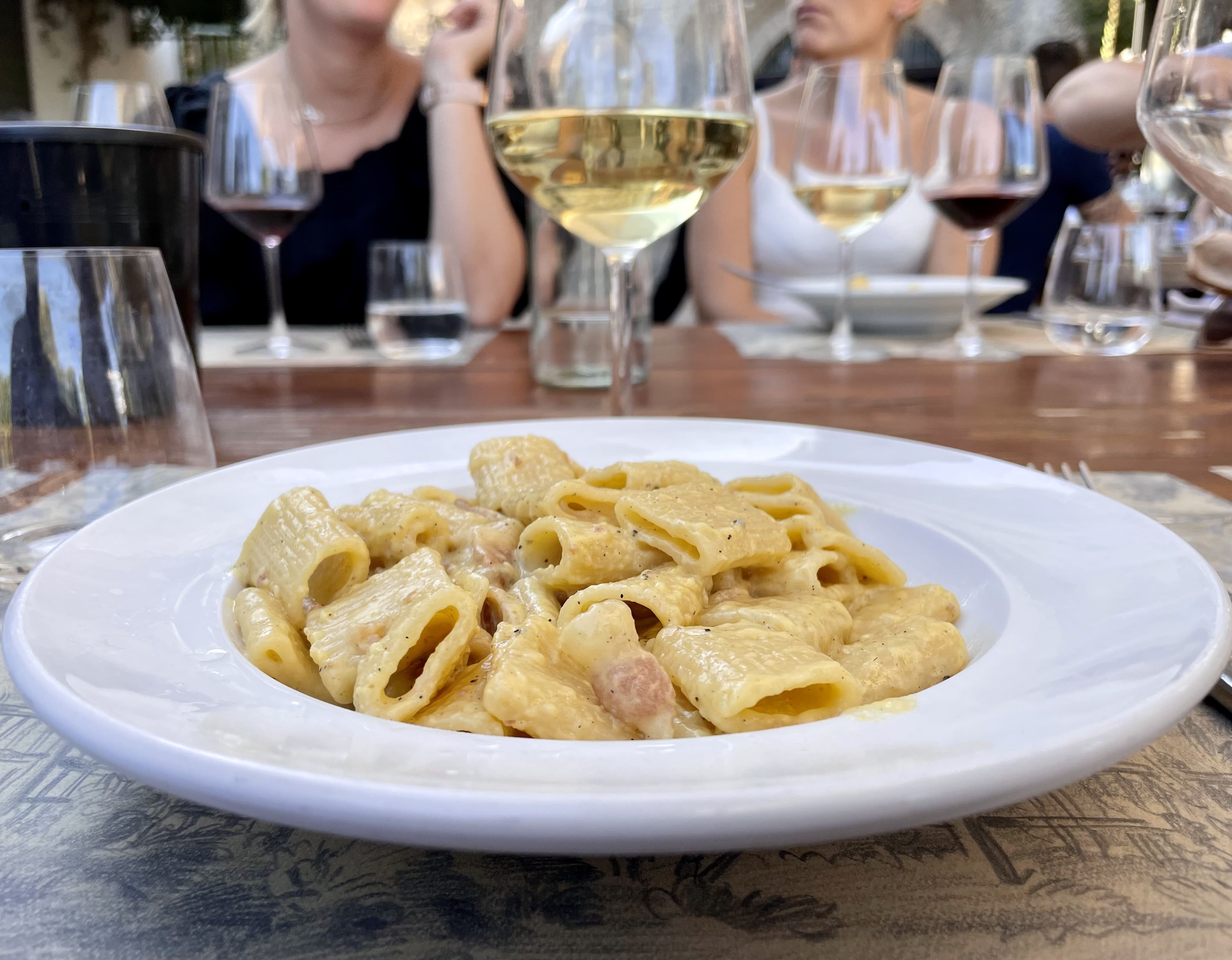

Pasta Carbonara took the definitive Italian twist when in 1960 guanciale (check pork) replaced bacon as is confirmed in the book of recipes “La Grande Cucina” by Luigi Carnacina.
However, the combination of ingredients had not been the right one for many years within a rash use of various elements such as garlic, onion, parsley or red pepper. Only in the 90’s the classic Carbonara was finally agreed to be made by eggs, pecorino and guanciale.
Therefore to cook pasta carbonara the guanciale has to be put in a pan to “sweat” without oil until it get caramelised and release all its fat. Then in a bowl a blend of pecorino and 1 egg (each person) have to be mixed to get a cream. When pasta is ready should be added, with a bit of its water, to the guanciale and, after the gas is off, the cream prepared can be stirred in the pan. Once the sauce gets the right creamy texture, the last important touch is to grind a bit of fresh black pepper on the top.

Overall Carbonara is a very savoury dish where the crunchy guanciale is the king that mingles beautifully with the creamy sauce, heated up by the spiciness of the black pepper, in an explosion of flavours in the mouth.
Hence, in regards of wine pairing is advised to go for something high in acidity to balance out the saltiness and fatness of the plate. Thus a good match is surely the Grechetto “109” 2018 by Tenuta La Pazzaglia. This great Grechetto shows an inviting nose of ripe yellow melon and ,on the palate, stands out for a lovely minerality, due to the volcanic soil, along with a persistent acidity.
After a nice taste of Carbonara, a wine like this will help to clean the palate and be ready for the next bite.
Carbonara is a classic example of Italian cuisine where an idea of poor origin brings together few ingredients with quality and love to release a taste that never loses its charm, simply because unique in the world.
Written by: Riccardo Pepi